September 11, 2026 · 1 min read
Typhoid Fever in Pakistan: Symptoms, Prevention, and Treatment
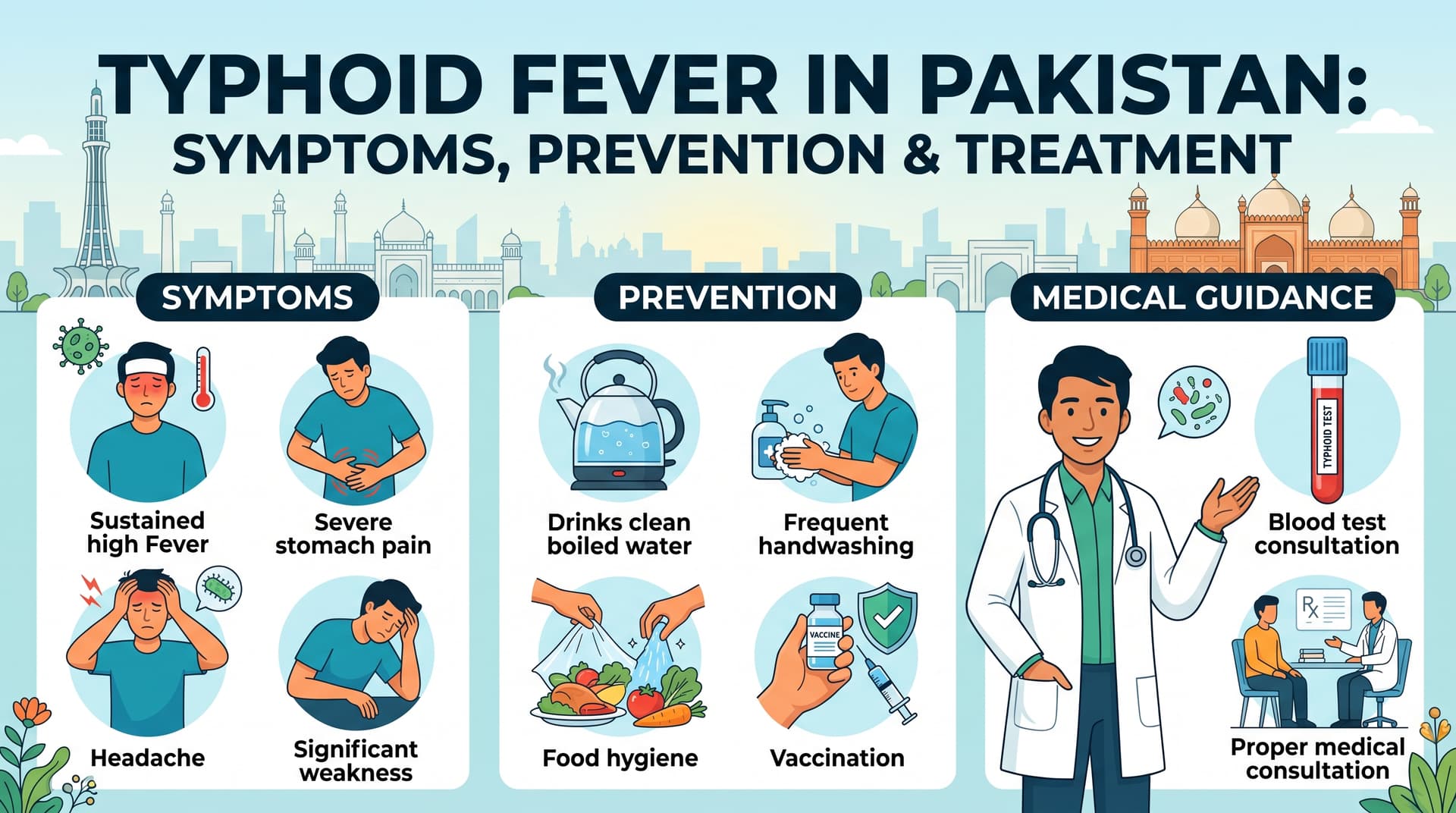
Typhoid fever, caused by Salmonella typhi bacteria, remains a significant health concern in Pakistan, largely due to contaminated water and food sources in many areas.
Symptoms usually develop gradually over one to three weeks and include sustained high fever, weakness, stomach pain, headache, and loss of appetite. Some people also experience constipation or diarrhea, and a distinctive rash of small flat spots may appear.
Because typhoid symptoms overlap significantly with other common fevers in Pakistan — dengue, malaria, and general viral infections — a proper diagnosis usually requires a blood test, which a doctor can order after an initial consultation.
Prevention centers largely around safe food and water practices: drinking boiled or filtered water, avoiding street food from questionable sources, washing fruits and vegetables thoroughly, and maintaining good hand hygiene, especially before eating.
Typhoid vaccines are also available and recommended in areas with higher risk, particularly for children and anyone traveling to regions with poor sanitation.
If typhoid is confirmed, treatment typically involves a course of antibiotics prescribed and monitored by a doctor — self-medicating with leftover antibiotics from a previous illness is not advisable, since incomplete or incorrect treatment can contribute to antibiotic resistance.
If you have a fever lasting more than three days without a clear explanation, it's worth consulting a doctor rather than waiting it out, since early diagnosis makes typhoid treatment considerably more straightforward.