August 11, 2026 · 1 min read
Food Poisoning in Pakistan: Home Remedies and When to See a Doctor
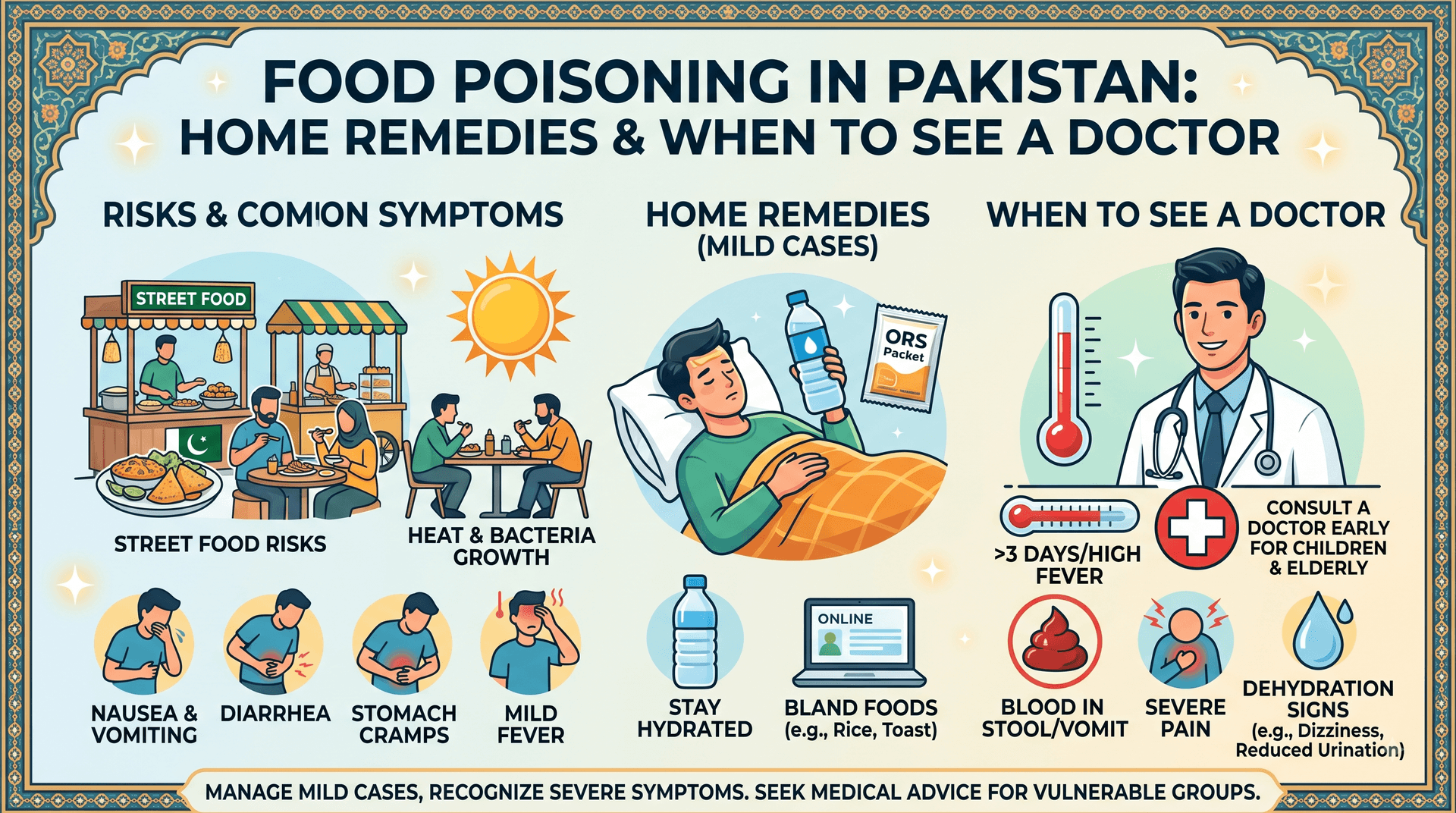
Food poisoning is a frequent complaint across Pakistan, driven by a combination of street food culture, hot weather that accelerates bacterial growth, and inconsistent food storage practices in some settings.
Typical symptoms include nausea, vomiting, diarrhea, stomach cramps, and sometimes mild fever, usually appearing within a few hours to a couple of days after eating contaminated food.
For mild cases, home management usually involves staying hydrated with water or oral rehydration solutions, eating light, bland foods like rice or toast once vomiting subsides, and avoiding dairy, spicy, or fatty foods until symptoms improve.
Certain signs indicate it's time to consult a doctor rather than continuing home care alone: symptoms lasting more than two to three days, high fever, blood in vomit or stool, signs of dehydration such as reduced urination or dizziness, or severe abdominal pain.
Children and elderly individuals are at higher risk of rapid dehydration from food poisoning, so it's generally wise to seek medical advice sooner for them rather than waiting to see if symptoms resolve on their own.
An online consultation with a general physician can help you determine whether your symptoms fit typical food poisoning or might indicate something else, like typhoid or a parasitic infection, which would need different treatment.
To reduce your risk going forward, being selective about food sources, ensuring water is properly filtered or boiled, and washing hands before eating are simple but effective preventive habits.