August 12, 2026 · 1 min read
Dengue Fever Symptoms and When to See a Doctor in Pakistan
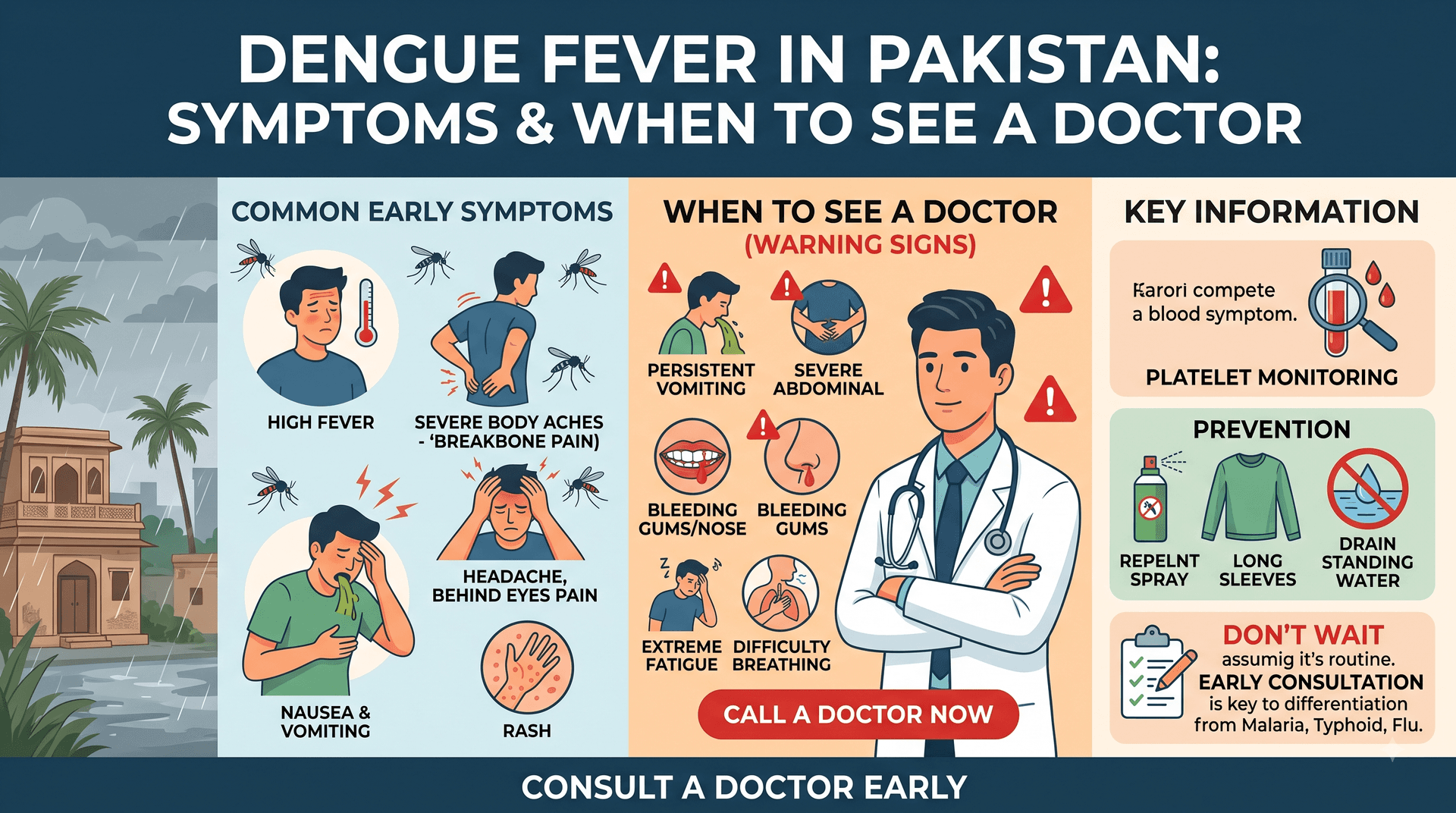
Dengue fever is transmitted by Aedes mosquitoes and tends to spike across Pakistan during and after the monsoon season, particularly in urban areas with standing water.
Early symptoms often resemble a typical viral fever: sudden high fever, severe headache, pain behind the eyes, and joint or muscle pain so intense it's sometimes called 'breakbone fever'. Nausea, vomiting, and a skin rash may also appear a few days in.
Most dengue cases are manageable with rest, fluids, and monitoring, but certain warning signs mean you should seek medical attention promptly: persistent vomiting, severe abdominal pain, bleeding from the gums or nose, unusual fatigue or restlessness, or difficulty breathing.
Because dengue shares symptoms with typhoid, malaria, and seasonal flu, a doctor consultation — even a chat or video one — can help you decide whether you need a blood test rather than guessing at home.
Platelet counts are usually monitored through the illness, so if you're diagnosed with dengue, your doctor will likely recommend periodic blood tests rather than a single check.
Prevention remains the best defense: eliminate standing water around your home, use mosquito repellents, and wear long sleeves during peak mosquito hours in the early morning and evening.
If you or a family member develops a sudden high fever during dengue season, don't wait it out for days assuming it's routine. An early consultation can catch warning signs before they escalate.