July 29, 2026 · 1 min read
Cold, Flu, or Allergies? How to Tell the Difference
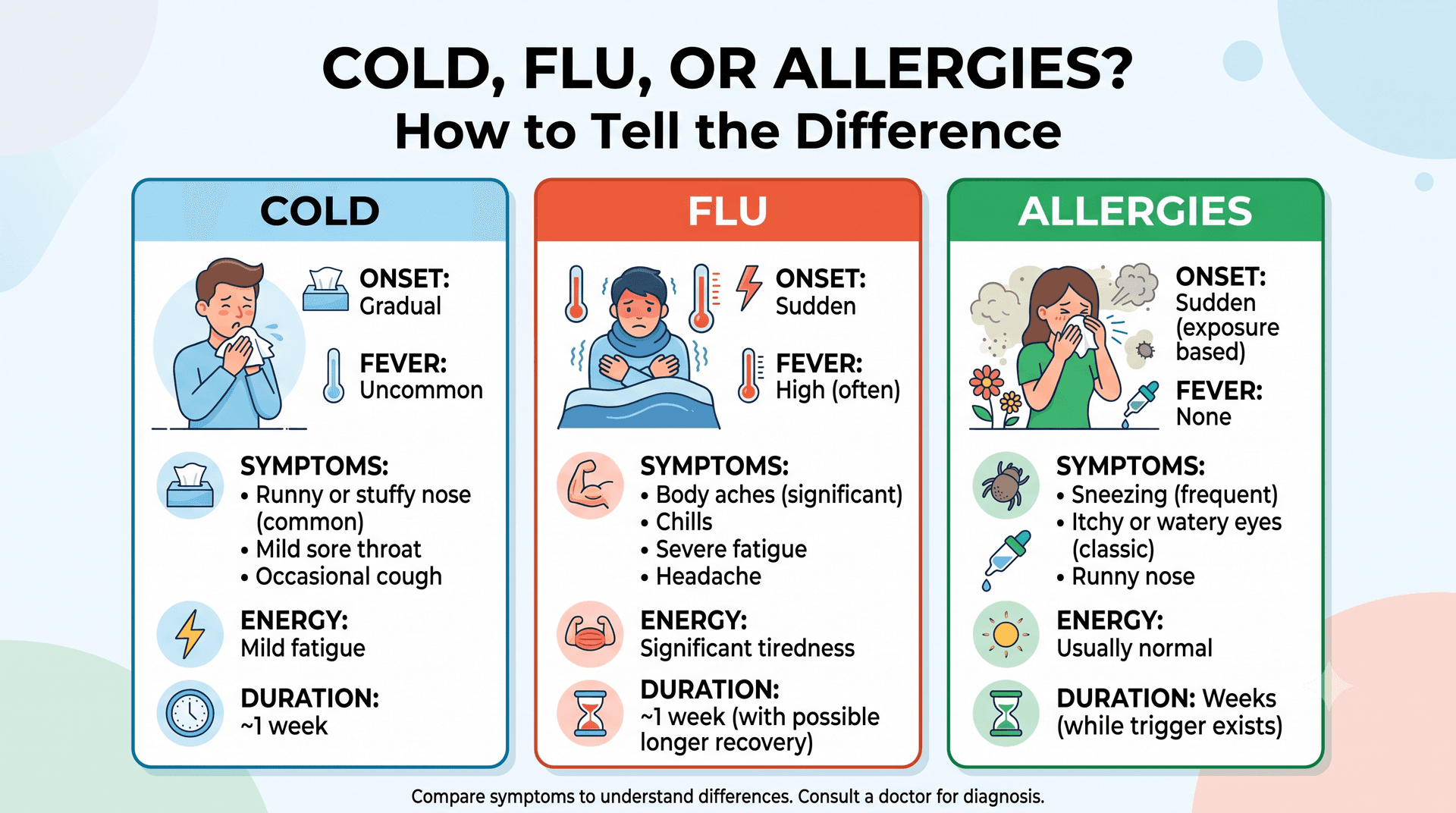
Every change of season brings the same question: is this a cold, the flu, or just allergies. The symptoms overlap enough that it is genuinely difficult to tell without paying attention to a few specific details.
A common cold tends to develop gradually over a day or two, with symptoms like a runny or stuffy nose, mild sore throat, and occasional cough. Fever is uncommon in adults with a typical cold, and energy levels are usually only mildly affected.
The flu, in contrast, tends to arrive suddenly and hits harder. High fever, significant body aches, chills, and noticeable fatigue are common, often severe enough to make normal activities difficult for several days.
Allergies are usually identifiable by their consistency and triggers. Symptoms like sneezing, itchy or watery eyes, and a runny nose that appear around the same time every year, or in response to specific environments like dusty rooms or blooming plants, point toward allergies rather than an infection.
One helpful distinguishing factor is duration. Colds typically resolve within a week to ten days. Flu symptoms, while more intense, also generally improve within a similar window. Allergy symptoms, however, can persist for weeks if the trigger remains present.
If you are dealing with a high fever, significant body aches, or symptoms that feel unusually severe, a consultation with a general physician is worthwhile, both for symptom relief and to rule out anything requiring closer attention.
For milder, ongoing symptoms that seem consistent with allergies, a chat consultation can help confirm whether an antihistamine or other approach is appropriate, without needing an in-person visit for something straightforward.
If symptoms include difficulty breathing, chest pain, or persist well beyond the usual timeframe, that is a signal to seek an in-person evaluation rather than continuing to manage it at home.